
CASE STUDY
5x Performance Improvement for a Leading Financial Products and Solutions Company
Ashnik Team
THE CUSTOMER
A leading financial products and solutions company hosting core banking and payment gateway switch infrastructure for 50+ banks.
THE SOLUTION
Ashnik merged both clusters into a single active-active Elastic deployment, replacing the VIP failover setup with a load balancer across all nodes.
THE CHALLENGE
Two separate active/passive clusters caused downtime on failover, left infrastructure underutilized, and couldn’t absorb 4x expected ingestion growth, without new technology or new budget.
THE RESULT
Indexing rate up 5x, search rate up 5x, and log retention extended from 5 to 8 days, on the same Elastic Stack.
50,000/sec
Indexing rate, up from 10,000/sec
5,000/sec
Search rate, up from 1,000/sec
3,000
Visualizations, up from 1,500
8 days
Log retention, up from 5 days
Customer Overview
The customer is a leading financial products and solutions company managing infrastructure for over 50 banks’ hosted core banking and payment gateway switch operations, spanning 5 Core Banking tenants and 50+ Payment Gateway integrations.
Its observability needs covered UPI transaction monitoring, OTP validation, core banking transactions, payment gateway monitoring, app and infrastructure monitoring, availability and latency tracking, and success/decline transaction analysis.
As a solution provider bound by strict SLAs to its own banking customers, the company needed an observability platform that didn’t just monitor, but let it take preventive action before issues reached end customers.
The Challenge
The Approach
Architecture
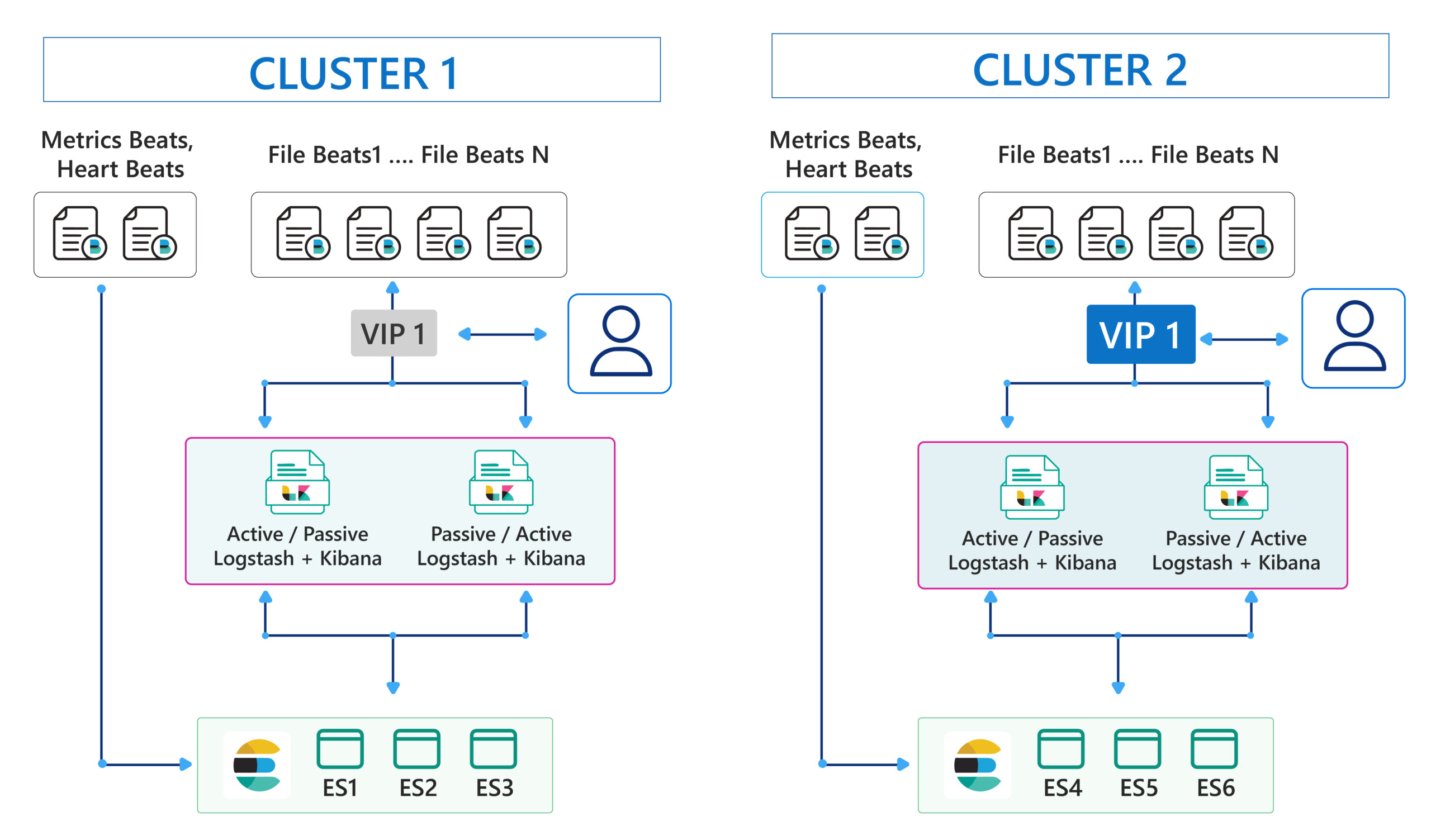
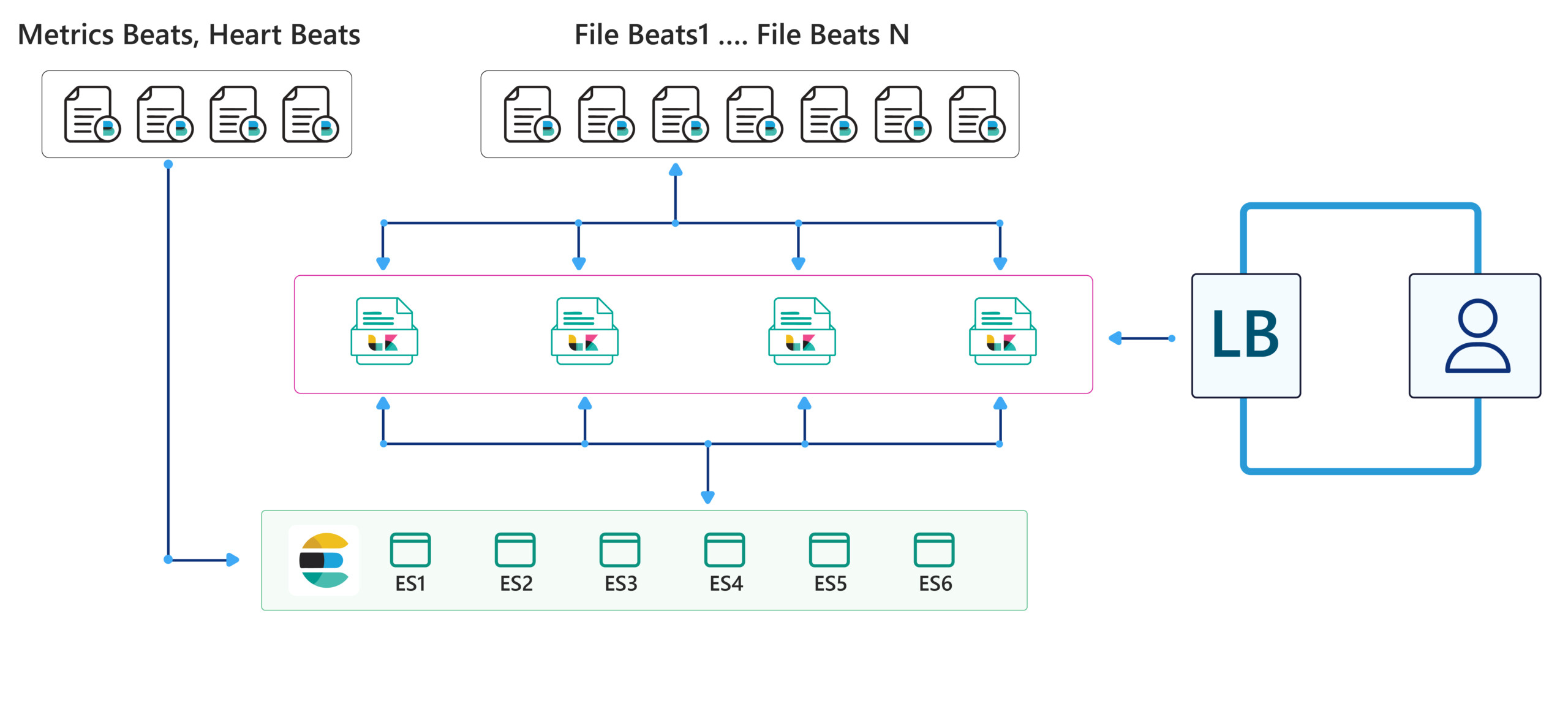
Scale
| METRIC | BEFORE | AFTER |
|---|---|---|
| Cluster topology | 2 separate clusters, active/passive | 1 merged cluster, active-active |
| Indexing rate | ≈10,000 events/sec | ≈50,000 events/sec |
| Search rate | ≈1,000/sec | ≈5,000/sec |
| Visualizations | ≈1,500 | ≈3,000 |
| Watcher alerts | ≈700 | ≈1,000 |
| Log retention | 5 days | 8 days |