

The enterprise AI narrative is dangerously misdirected.
Every conference debate circles around model size, inference cost, prompt engineering, agent frameworks.
That is not where enterprise AI breaks.
It breaks at the system boundary.
Inside most serious enterprises, AI already works. Code is written faster. Risk scenarios are evaluated in minutes. Support tickets are summarized instantly.
The pilot succeeds.
Then it stalls.
Not because the model is weak.
Because the architecture is.
And most organizations are trying to bolt intelligence onto platforms that were never designed for it.
This is the most expensive assumption in enterprise AI.
“We’ll prove the use case first.”
“We’ll harden it later.”
Later rarely comes.
Because the moment AI influences a real workflow — pricing, risk scoring, customer communication, operational automation — it inherits production expectations:
Scaling AI is not a later phase.
It is an architectural decision made on day one.
AI pilots succeed at the edge.
Enterprise systems operate at the core.
The collision happens in four places:
AI outputs look confident even when data is stale.
If ingestion pipelines lag, if schemas drift, if lineage is unclear — the system does not fail loudly.
It degrades silently.
Most AI issues at scale are not intelligence failures.
They are pipeline failures.
Traditional monitoring tells you CPU usage
It does not tell you:
If AI behavior is not observable across logs, metrics, traces and data flow — it cannot be governed.
And if it cannot be governed, it cannot be trusted.
During a pilot, ownership is clear: the innovation team.
In production, who owns it?
Platform engineering?
Data engineering?
Security?
Application teams?
When AI spans data pipelines, storage tiers, APIs and application logic, ownership fragmentation becomes a structural risk.
Most enterprise systems were designed around deterministic applications.
AI systems are probabilistic, dynamic and data-hungry.
They demand:
If the underlying platform cannot sustain that flow, AI becomes brittle.
Enterprise AI at scale is not a model problem.
Below is what actually separates scalable AI from stalled AI.
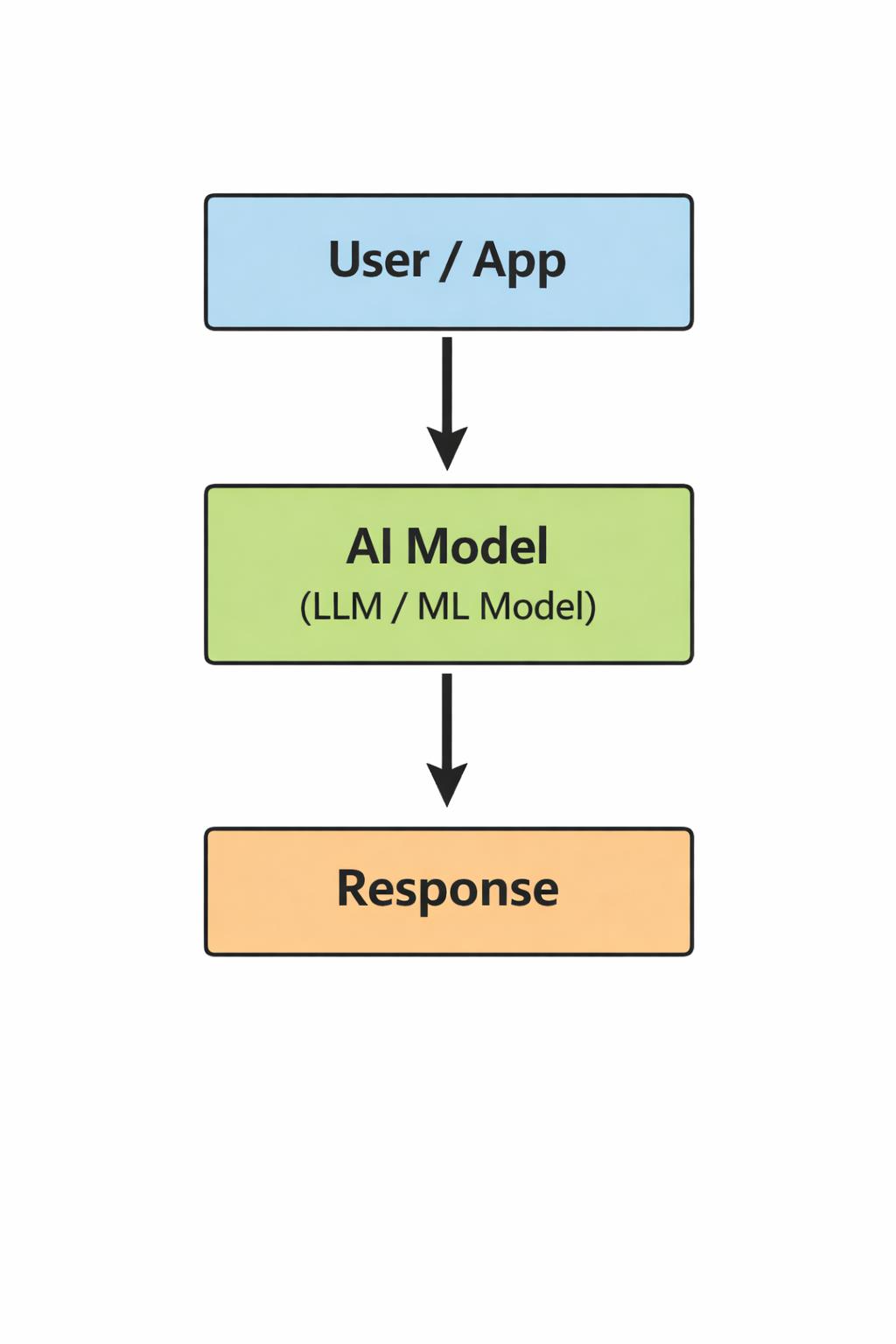
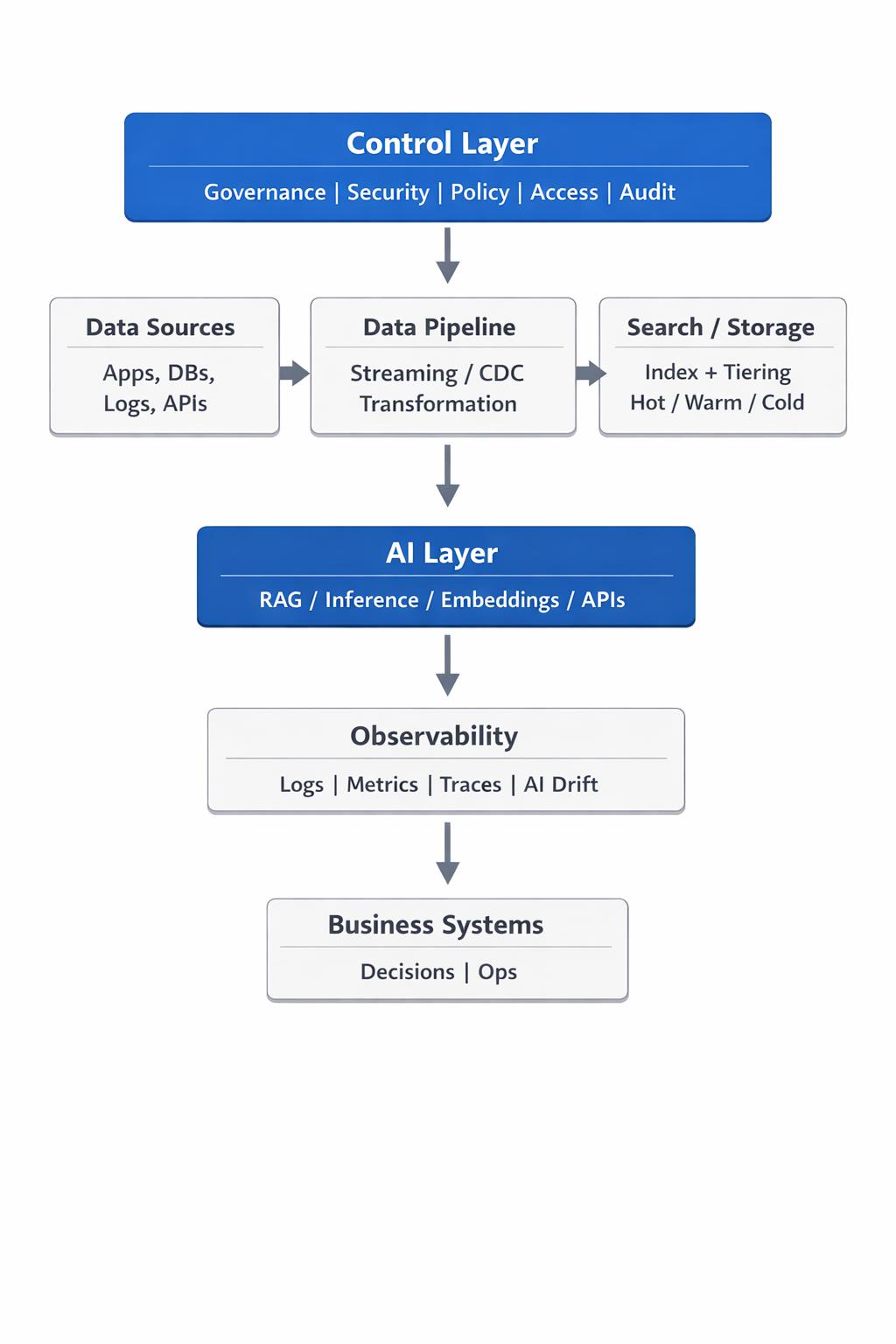
In production, the model is only one layer in a much larger system.
And that system determines whether AI survives contact with reality.
Enterprises that struggle with AI adoption often blame:
In reality, the constraint is architectural readiness.
Organizations with:
move from pilot to production far more smoothly.
Not because their models are better.
Because their execution layer is stronger.
AI systems evolve rapidly.
Models change. Retrieval patterns change. Data sources multiply.
Closed, rigid platforms amplify lock-in and reduce visibility precisely when adaptability is required.
Open foundations — in data pipelines, search platforms, observability frameworks — provide structural flexibility when intelligence becomes part of core systems.
At scale, adaptability is not ideology.
It is risk management.
AI maturity is not measured by:
It is measured by:
Most organizations are experimenting with AI.
Few are engineering for it.
The next phase of enterprise AI will not reward experimentation.
It will reward platform discipline.
The enterprises that treat AI as:
will move ahead quietly and sustainably.
The rest will continue to demo.
And call it transformation.
AI is not a feature you add.
It is a workload you must architect for.
The model is visible.
The execution layer is invisible.
And in enterprise systems, what is invisible usually determines what survives.