



PGDay Mumbai 2026, held on 7th February at IIT Bombay, brought together PostgreSQL practitioners, contributors, and engineers for a full day of focused technical discussions. Ashnik participated as one of the event sponsors and used the platform to share hands-on work around Model Context Protocol (MCP) for PostgreSQL, addressing how AI systems can interact with databases safely and responsibly.
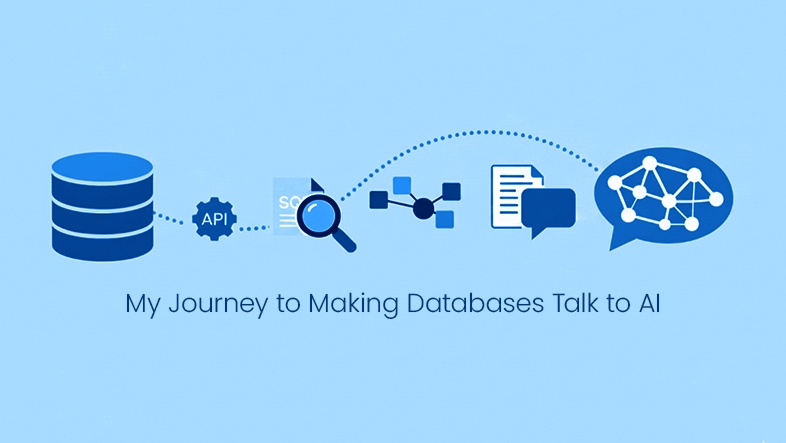
Ashnik’s lightning talk, delivered by Veerendra Pulapa, focused on building an MCP server for PostgreSQL and the real-world problems that led to it.
As teams begin integrating AI into production workflows, a common challenge emerges. AI systems need access to live data, but direct database access introduces serious risks around permissions, data leakage, and uncontrolled queries. Ashnik’s MCP approach introduces a clear boundary between AI and the database.
The session demonstrated how an MCP server can expose structured database context to AI while enforcing strict read-only access. Instead of allowing unrestricted queries, the MCP layer governs what the AI can ask, what it can see, and how responses are generated. This keeps PostgreSQL protected while still enabling useful AI-driven reasoning.
Veerendra shared practical learnings from implementing the MCP server, including why MCP is kept external to the database engine, how context is generated deterministically, and where teams need to be careful when mixing non-deterministic AI systems with structured data. The focus stayed on implementation choices and operational realities rather than future promises.
A deeper walkthrough of this work and the architectural decisions behind it is available here: MCP for PostgreSQL
The relevance of Ashnik’s MCP work was reinforced by the broader themes discussed during the day.
The event opened with organizers highlighting the rapid growth of the PostgreSQL community in Mumbai and a visible shift from proprietary databases toward Postgres, including adoption across major Indian public and private sector banks.
The keynote by Professor Prabhu Ramachandran from IIT Bombay set a strong context by discussing digital sovereignty and the risks of dependency on proprietary platforms. His emphasis on open-source control and self-reliant digital infrastructure is closely aligned with Ashnik’s focus on governed access to data.
Other sessions provided a snapshot of how PostgreSQL continues to evolve.
Ajit Gadge spoke about the evolution of search in PostgreSQL, covering full-text and semantic search using pgvector.
Kamesh demonstrated how PG Lake allows PostgreSQL to query data stored in object storage without moving it.
Jeevan Ladhe walked through query planner behavior and performance tuning realities.
Sessions by Deepti Jain, Manan from Supabase, and Ashutosh Bapat touched on in-database machine learning, horizontal scalability, and upcoming graph query standards.
A technical session by Harikiran explored active-active PostgreSQL systems using Spock, focusing on multi-master replication and schema change challenges.
These talks added depth to the day while reinforcing PostgreSQL’s growing role across diverse workloads.
PGDay Mumbai 2026 reflected a community focused on solving real problems at scale. Ashnik’s contribution through MCP for PostgreSQL aligned strongly with this direction, showing how AI and databases can work together without compromising security, clarity, or control.
For those who want to revisit the sessions, the full event recording is available here: PGMumbai 2026

